
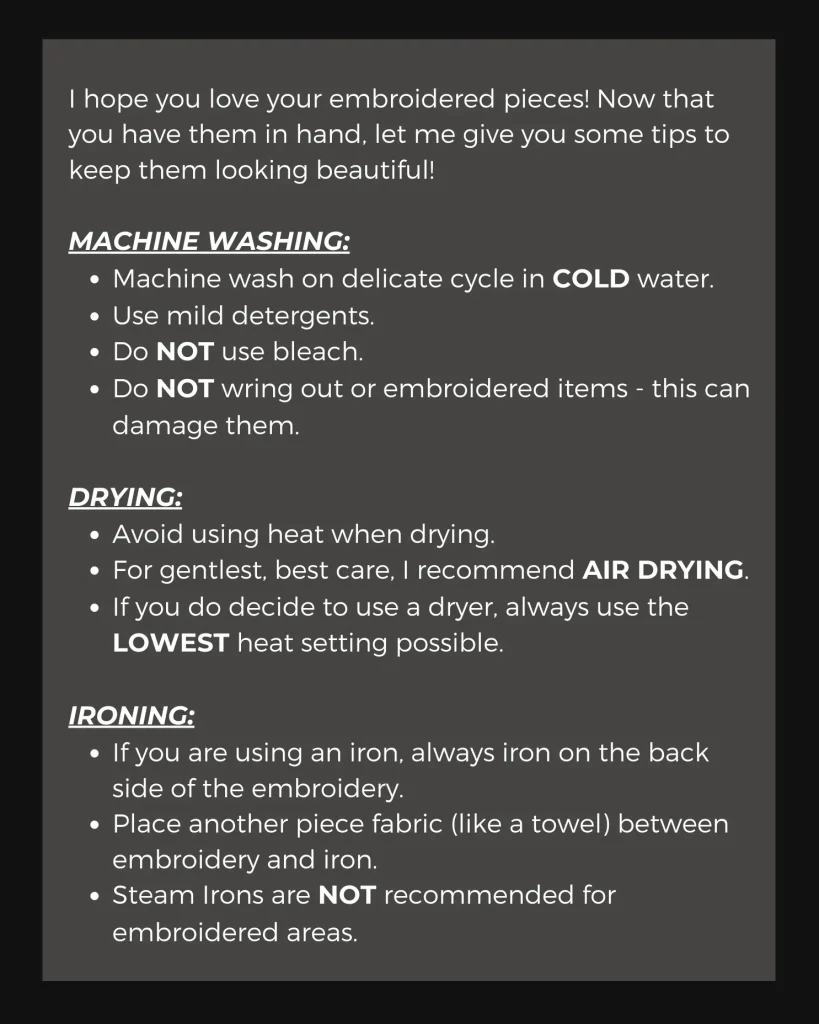
Embroidered care tips help keep color bright and stitches strong, turning each piece into a lasting story. By learning how to preserve embroidery, you extend the life of your needlework beyond the day you finish it. This concise guide blends practical routines with gentle handling to protect fabric, thread, and pattern from fading and snagging, while encouraging mindful touch and seasonal checks. Smart washing, mindful storage, and considerate display choices form the core of a lasting, vibrant embroidery collection that travels well in display cabinets and photo albums. Whether you’re protecting heirloom textiles or modern designs, these straightforward practices make care approachable for hobbyists and professionals.
Viewed through the lens of needlework maintenance and textile preservation, this topic covers more than routine washing. Treating each piece as a small textile treasure, you practice stitching care, proper air-drying, and breathable storage to protect color and structure. Concepts like embroidery cleaning and storage, archival backings, and frame protection become part of a practical routine, not a fuss. By reframing care as maintenance for heirloom and contemporary pieces, you can apply the same discipline to any project, from delicate linens to bold canvas-work. To sum up, this approach helps you preserve embroidered projects, resting on thoughtful handling, periodic checks, and gentle conservation-minded habits.
Embroidered care tips: foundational strategies for preserving embroidery
Understanding your materials is the first step in any embroidery care plan. From fabric type to thread material, knowing what your piece is made of informs every decision about how to preserve embroidery over time. This is where the core embroidered care tips begin—by respecting the unique fiber and dyestuff that give your design its character and resilience.
Start with a small test area before applying any care method to the whole item, as this is part of the broader practice of how to preserve embroidery over years. Testing helps you confirm colorfastness and fabric tolerance, reducing the chance of irreversible damage and keeping stitches even and vibrant.
Choosing fabrics and threads for longevity
Fabrics and threads determine how well an embroidered piece ages. Natural fibers such as linen and cotton breathe, but they can yellow or wrinkle if stored improperly or exposed to light. Choosing a durable, evenly woven base supports stitching care and helps preserve embroidered projects over time.
Thread matters too: some silks and cottons glow with color but require gentler handling. Be mindful of colorfastness and dye stability; test against the fabric shade and consider storage conditions. This is part of embroidery cleaning and storage planning, preventing dye migration and ensuring that stitches retain their sheen.
How to preserve embroidery through proper washing and drying
Cleaning is a delicate stage; the instinct to soak or scrub can damage the stitches. The safest approach begins with testing and gentle handling. Hand washing with cold water and a mild, pH-balanced detergent designed for delicate fabrics supports embroidery care.
Drying matters as much as washing. Lay flat to air dry away from direct sunlight. Avoid wringing, twisting, or heat; these actions can set wrinkles and distort stitch density.
Stitching care: protecting stitches from wear
Stitching care is about preventing snagging and maintaining stitch integrity. When ironing, use a low heat setting and a pressing cloth; never press directly on stitches. This practice helps protect embroidery from flattening or distortion and ties into the broader goal of stitched care.
During wear and display, seams and motif areas are most vulnerable. Use breathable coverings and avoid rough surfaces that abrade threads. Regularly inspect edges for loose threads and address them promptly to sustain the design’s texture and color.
Storage and display strategies to minimize damage
Storage decisions greatly influence longevity. Store in a cool, dry, and dark place; humidity around 40-50% helps prevent mold and color bleed. Use acid-free tissue to pad folds and cushion seams, and choose lignin-free, pH-neutral boxes for flat storage. These steps are practical components of preserving embroidered projects.
Display choices matter too. If framed, select UV-protective glass and ensure the frame remains away from direct light. When hanging fabric pieces, provide breathable backing and rotate displays to reduce sun exposure. This aligns with embroidery cleaning and storage principles, ensuring the piece remains vibrant when not in use.
Preservation methods and documentation for heirlooms
Advanced preservation combines framing, backing, and protective layers. For heirloom-level pieces, framing with acid-free mats and linen backing creates a breathable, inert environment. A light protective backing reduces contact with dust and body oils, supporting long-term preservation and the goal to preserve embroidered projects.
Keep a care log detailing fabric type, thread materials, care steps, storage conditions, and observed changes. Documentation supports consistent, gentle handling across generations and serves as a guide for future embroidery cleaning and storage decisions. Regularly re-evaluate framing and materials, especially as sunlight and humidity conditions shift.
Frequently Asked Questions
What are the essential embroidered care tips for maintaining delicate embroidery?
Key embroidered care tips begin with gentleness: test a hidden area, use cold water with a mild detergent for delicate fabrics, and avoid optical brighteners. If washing by machine, use a mesh bag and a gentle, cold cycle, then press out moisture between towels and reshape while damp. Air dry flat away from direct sun and heat. Store using acid-free tissue to protect color and fabric integrity.
How to preserve embroidery over time: what storage conditions help protect color and fabric?
To preserve embroidery over time, keep it in a cool, dry, dark space with humidity around 40–50%. Pad folds with acid-free tissue and store flat in lignin-free, pH-neutral boxes. If mounted, use UV-protective glass and avoid direct sunlight. Periodically check storage conditions for moisture, pests, or color changes.
What does stitching care involve to prevent snagging and fraying?
Stitching care focuses on preventing snagging and distortion: handle gently, avoid pulling threads, and iron with a pressing cloth on a low setting, never directly on stitches. Secure loose threads promptly and trim frayed ends. When washing, use cold water and minimal agitation, and press between towels after drying.
What are the best practices for embroidery cleaning and storage?
Embroidery cleaning and storage practices: test cleaning methods on a hidden area, choose gentle detergents, and air-dry flat. Avoid long-term use of plastic; store in breathable, acid-free tissue and archiving boxes. If framed, select UV-protective glass and back with breathable materials.
How can I preserve embroidered projects and keep them vibrant for years?
To preserve embroidered projects and keep colors vibrant, frame with UV-protective glass, back with breathable material, and maintain a care log. Regularly inspect for moisture, pests, and color bleed; rotate displayed pieces to limit sun exposure. When unsure, perform a colorfastness test on a hidden area.
What common mistakes should I avoid with embroidered care tips?
Common embroidered care tips mistakes include hot water, bleach, or harsh solvents; storing in plastic long-term; folding along stitch lines; direct sun or heat exposure; and wringing or rough agitation. Always test a hidden area first and avoid aggressive cleaning methods.
| Topic | Key Points |
|---|---|
| Understanding Embroidered Materials |
|
| Why Proper Care Matters |
|
| Washing and Cleaning Techniques for Embroidered Items |
|
| Storage and Display |
|
| Preservation Methods |
|
| Common Mistakes to Avoid |
|
| Seasonal and Long-Term Care |
|
| A Quick Reference for Stitching Care |
|
Summary
Below is an HTML table summarizing the key points of the base content about embroidered care tips, followed by a descriptive conclusion optimized for SEO.