
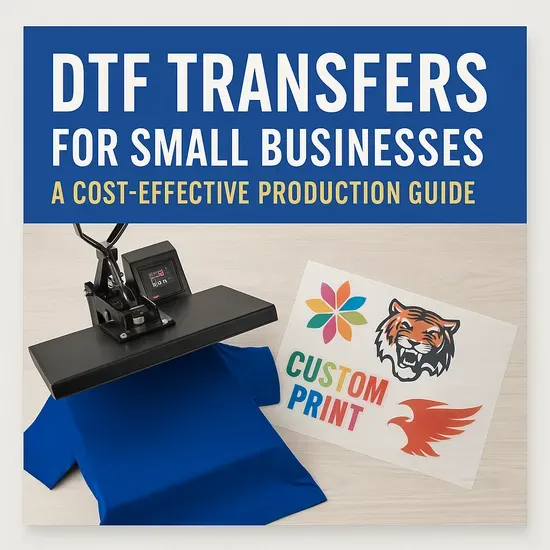
DTF transfers for small businesses are reshaping how teams approach customization, inventory, and rapid order fulfillment. As on-demand apparel grows, this method offers a flexible, scalable option for growing brands. Small teams can balance upfront equipment costs with durable results that endure customer wear and washing. A well-planned workflow helps maintain color vibrancy and consistency across batches. By linking design, production, and fulfillment, you can align print capabilities with brand margins and customer expectations.
To frame this option in broader terms, consider direct-to-film transfers—a film-based method that keeps setup lean while delivering bold graphics across fabrics. When evaluating costs and efficiency, look at DTF transfer speed to gauge value alongside turnaround time. Manufacturers also measure DTF transfer quality to ensure designs survive washing and wear. For deployment decisions, compare direct-to-film transfer capabilities with alternative methods, focusing on scalability, fabric compatibility, and operational ease.
DTF transfers for small businesses: cost-effective printing options
DTF transfers for small businesses offer a cost-conscious path to apparel customization. With DTF transfers, small teams can print vibrant designs on demand without the high minimums of screen printing, and without the variability of DTG limited by fabric type. The upfront investment includes a compatible printer, DTF inks, transfer films, and a heat press, but the per-unit cost tends to be favorable for short runs when you factor in design flexibility and no mold fees. In practice, DTF printing lets you scale up or pivot designs with less risk, supporting margins and cash flow.
To nail ROI, run a pilot project of 50-100 units to understand real-world DTF transfer costs, lead times, and yield. Track cost per unit across fabrics, consider consumables and maintenance, and compare against traditional screen printing benchmarks. As you amortize the initial equipment over a growing catalog, your unit economics improve, especially for on-demand or frequent design updates that modern DTF transfers enable.
DTF printing for on-demand merch: flexibility and fabric versatility
DTF printing shines for on-demand merchandise because designs can be produced as orders come in, with less storage risk and faster turnover. The workflow supports a broad range of fabrics—from cotton tees to blends and blends with polyester components—that accommodate diverse customer preferences without the setup pain of other methods. This versatility helps merch teams respond quickly to trends and seasonal drops.
With high color fidelity and gradient reproduction, DTF transfer speed and quality matter for turnarounds. Ensure prepress work is tightened, calibrate color profiles, and choose reliable transfer films and adhesive powders to maintain consistency across runs. The result is reliable DTF transfers that meet brand color standards across a diverse fabric mix, enabling scalable customization.
Maximizing ROI with DTF transfer costs and efficient workflows
ROI with DTF transfers hinges on aligning design velocity with pricing and process efficiency. By modeling cost per unit across typical runs and testing small batches, you can price products to sustain margins while staying competitive. DTF transfer costs should be tracked alongside consumables and labor, not just raw ink or film; over time, smarter procurement and routine maintenance reduce spikes in expense.
An optimized workflow reduces wasted time and errors. Start with a 5-20 design catalog to streamline production, map the end-to-end process, and implement quality checks at pre-press and post-press stages. By investing in samples and proofs, you validate color accuracy and durability before large-scale production, preserving ROI and customer satisfaction.
DTF transfer quality: achieving durable, vibrant results across fabrics
DTF transfer quality depends on multiple factors, including print resolution, color management, film quality, adhesive powder, and proper curing. High-resolution artwork paired with accurate color profiles ensures sharp edges and faithful hues on cotton, blends, and synthetic fabrics. Regular wash tests reveal how well the transfer holds up to laundering, guiding adjustments to temperature, dwell time, and pressure.
To maintain consistent transfer quality, establish a standard operating procedure that covers artwork prep, film handling, powder application, and post-press curing. Ongoing QA, sample testing, and customer feedback loops help identify fabric-specific needs and prevent common issues such as cracking or dull colors, ensuring long-term satisfaction with DTF transfers.
Speed and scalability: how DTF transfer speed supports growing merch lines
DTF transfer speed matters when your brand introduces frequent drops or limited editions. A streamlined workflow—design, print, cure, transfer—works best for small-to-medium runs, where setup time is minimized and rework is reduced. Optimizing prepress readiness, batch planning, and heat press calibration reduces cycle times and helps you meet tight fulfillment windows.
Sustained speed also comes from equipment maintenance and process tuning. Regular printer and film maintenance minimizes downtime, while predictable drying and curing times keep production moving. When speed and quality align, DTF transfers empower rapid iteration, seasonal campaigns, and on-demand orders without sacrificing result quality.
In-house vs outsourcing: building the right DTF transfers workflow for small teams
Choosing between in-house DTF transfers and outsourcing depends on control, cost, and capacity. In-house production gives you direct oversight of artwork, timing, and changeovers, which can be crucial for frequent updates or brand-led customization. The tradeoff is higher upfront capital, ongoing maintenance, and space requirements for printers, powders, and films.
Outsourcing reduces capital risk and can accommodate seasonal spikes or experiments with new product lines. A hybrid approach—core products produced in-house with outsourcing for overflow or specialty runs—often provides balance, flexibility, and consistency for small teams. Evaluate quarterly volume, design cadence, storage, and customer delivery expectations to design a DTF workflow that scales as you grow.
Frequently Asked Questions
What are DTF transfers for small businesses, and why are they a practical option for on-demand apparel?
DTF transfers for small businesses are a heat-activated method that moves vibrant designs from a film to fabric. They’re practical for on-demand apparel because they work across many fabrics, offer detailed color reproduction, and typically require lower setup costs and faster turnarounds than traditional screen printing, making them a strong fit for small teams.
How are DTF transfer costs structured for small-batch orders in DTF transfers for small businesses, and how can you optimize them?
DTF transfer costs include upfront equipment and supplies (printer, heat press, inks, films, powder) and the per-unit cost of each item. For small batches, per-unit costs are competitive, but total costs rise with volume. Optimize by running pilot runs, tightening workflow, and planning a core catalog to improve cost per unit while maintaining quality.
What factors influence DTF transfer quality for small business merchandise?
DTF transfer quality depends on print resolution, film and powder quality, proper curing, and fabric compatibility. Establish standard operating procedures, perform wash tests, and test common fabrics to ensure consistent color, adhesion, and durability across batches.
What affects DTF transfer speed in small business production, and how can you speed up turnaround?
DTF transfer speed is affected by prepress readiness, batch size, heat press calibration, and equipment maintenance. Streamline artwork prep, optimize batch runs, and maintain equipment to minimize downtime, helping you meet tighter fulfillment deadlines.
Which fabrics work best with DTF transfers for small business product lines?
DTF printing generally yields excellent results on cotton and common blends, with good performance on poly blends as well. Always conduct fabric tests on your most-used materials to fine-tune heat, pressure, and curing times for optimal transfer quality.
Should a small business handle DTF printing in-house or outsource DTF transfers, and what are the cost/quality considerations?
Decide based on volumes, lead times, and control needs. In-house DTF printing offers design flexibility and faster iterations but requires upfront investment and ongoing maintenance. Outsourcing reduces capital risk and can handle spikes, but may involve longer lead times. Compare DTF transfer costs, quality expectations, and your brand’s calendar to choose the best approach.
| Topic | Key Points | Practical Takeaways |
|---|---|---|
| What are DTF transfers? | Direct-to-film transfers involve printing designs on a specialized film, then transferring to fabric with heat and pressure. They are versatile across fabrics, support intricate color gradients, and are well-suited for small batches with lower setup costs than screen printing or DTG. | Choose DTF for flexible, multi-fabric designs and faster turnarounds on limited runs. |
| Cost considerations | Upfront needs include a compatible printer, DTF inks, transfer films, and a heat press. Per-unit costs are favorable for small runs, but consumables and maintenance add ongoing costs. Running a pilot (e.g., 50–100 units) helps gauge real-world expenses, lead times, and yield; add overhead like electricity, workspace, and labor to unit economics. | Run a pilot first and factor all overheads when evaluating ROI. |
| Quality and durability | DTF can deliver bright, detailed imagery with strong color fidelity across fabrics. Key drivers include print resolution, film/powder quality, proper curing, and fabric compatibility. Establish SOPs, perform wash tests, and implement regular quality checks to maintain consistency and reduce returns. | Develop SOPs and routine QA to ensure reliable results. |
| Speed and production efficiency | DTF often enables faster setup and production for small-to-medium runs. Important factors: prepress readiness, batch feasibility, heat-press calibration, and regular maintenance to minimize downtime. | Plan workflows to minimize bottlenecks; consider mixing methods for larger volumes. |
| In-house vs outsourcing | In-house offers control for frequent design changes but requires capital and ongoing maintenance. Outsourcing reduces upfront costs and handles production risk, but may introduce longer lead times and potential minimums or price changes. | Consider a hybrid approach: core in-house with outsourcing for overflow or specialized runs. |
| Maximizing ROI | ROI comes from aligning design velocity, pricing margins, and operational efficiency. Use a small catalog, test color/durability, map and optimize workflows, and build QA feedback loops. | Focus on repeatable designs, validated quality, and efficient processes. |
| Common questions | DTF is versatile across fabrics but fabric choice affects bonding; durability depends on proper curing. It suits small-to-medium runs; you can mix designs and colors without heavy setup. | Test fabrics and guide customers on care to manage expectations. |