
DTF printing has rapidly transformed garment decoration, offering a versatile path for artists, brands, and small shops to create vibrant, durable designs. As Direct-to-Film for garments technology, the process uses a transfer film as the carrier for CMYK inks and white where opacity is needed. You’ll appreciate its color density and the ability to print on a wide range of fabrics, from cotton to blends. When weighing DTF transfer film methods against other garment printing techniques, the differences in cost, durability, and feel become clear, including contrasts between DTF vs DTG. This introductory guide highlights essential supplies, the core workflow, and practical tips to achieve consistent, professional results.
Put simply, this film-based transfer approach decorates textiles by printing onto a film that acts as a carrier for inks. Rather than printing directly onto the fabric, the design is transferred from the film to the garment using heat, creating a flexible, vivid result. From an SEO-friendly, web-ready perspective, think of it as a modern print-on-film technique that enables vibrant images on a wide range of fabrics. If you’re evaluating garment decoration options, compare it with other methods like direct-to-garment, sublimation, or heat-transfer vinyl by looking at color fidelity, durability, and production speed.
DTF printing: A Modern Garment Decoration Method
DTF printing has emerged as a practical option for artists, brands, and small shops seeking vibrant, durable designs. By printing on a transfer film that carries CMYK inks and, where needed, white ink, DTF delivers full-color artwork that can be moved onto a wide range of fabrics using heat and pressure.
Compared with traditional garment printing methods, DTF offers flexibility, consistent color, and a softer hand on many fabrics. It sits within the broader set of garment printing techniques, enabling on-demand production and easier scaling for small runs.
Direct-to-Film for Garments: How the Film-Based Transfer Works
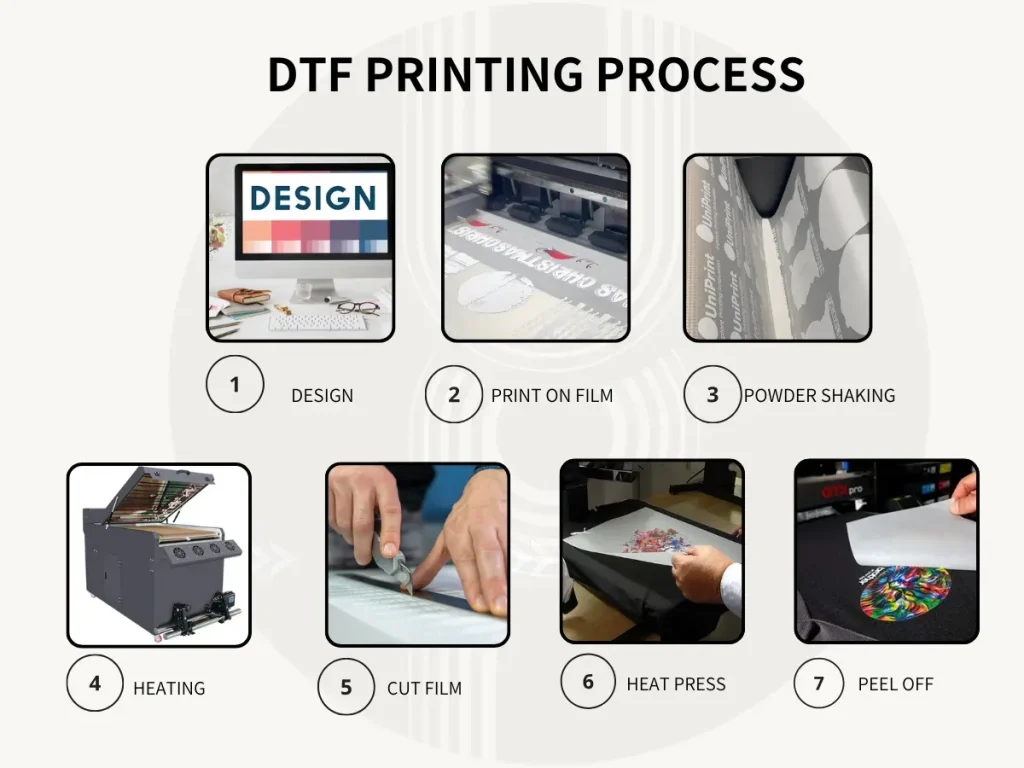
Direct-to-Film for Garments describes the workflow where artwork is designed, printed onto a PET film with CMYK inks (and white where opacity is needed), then a tacky powder is applied and cured to fix the image to the film.
The final transfer uses a heat press to apply the image to fabric. The result is a vivid, durable print that can resemble screen printing in color density while retaining the flexibility needed by makers.
DTF Transfer Film: Materials, Inks, and Curing for Durability
DTF transfer film comes in various formulations, with different tackiness and thickness. Inks range from water-based CMYK to extended color gamuts, and white ink is essential for opacity on dark fabrics.
Powder adhesives help the transfer bond to fabric; curing solidifies the powder on the film and helps prevent issues during transfer. Select films and inks with consistent bonding to avoid powder clumping and edge fringing.
DTF vs DTG: A Practical Comparison for Garment Printing
DTF vs DTG: Direct-to-Film requires a transfer to fabric rather than printing directly on the garment, offering strong color density and broader fabric compatibility, including blends and cotton.
DTG prints directly on fabric and may require pretreatment, especially on dark garments. Each method has strengths depending on fabric type, run size, and the desired hand feel.
Color Management, White Ink, and Finishes in DTF
Color management is central to successful DTF printing, with white ink providing opacity on dark fabrics and helping maintain color brightness and fidelity.
Finishes vary by film and heat settings; matte and slightly glossy appearances are common. Choose film and ink systems that deliver consistent bonding, a soft hand, and strong wash durability.
Getting Started with Garment Printing Techniques: A Practical Guide
If you’re new to garment printing techniques, start with a few test designs to dial in heat, pressure, and curing times across fabrics.
As you gain experience, you can scale to larger runs using a combination of DTF printing and other methods, guided by a careful workflow, proper pre-press planning, and reliable film supply chains.
Frequently Asked Questions
DTF vs DTG: How do they differ for garment decoration?
DTF printing uses a transfer film with CMYK inks (and white where needed) and a tacky powder to move artwork from film to fabric with a heat press. It often delivers stronger color density on a wide range of fabrics, including cotton and blends, and typically requires less pretreatment than DTG. DTG prints directly onto the garment and usually needs pretreatment on dark fabrics, delivering a soft hand on some materials. Your choice depends on fabric, volume, and desired finish.
What is Direct-to-Film for garments and how does it work?
Direct-to-Film for garments describes printing onto a PET film with CMYK inks (and white ink where opacity is needed), then applying a tackifying powder and curing before transferring the image to fabric with heat. This workflow yields vibrant, durable transfers that work on a wide range of fabrics and textures because the film carries the color and adhesive prior to pressing.
What is a DTF transfer film and why is it essential in the process?
DTF transfer film is a PET film that carries the printed image and adhesive with a tacky powder used during transfer. The film quality influences edge crispness, color fidelity, and adhesion, making it essential for reliable results and wash durability in DTF printing.
Which garment printing techniques are compatible with DTF printing on cotton and blends?
DTF printing is compatible with cotton and blends, delivering full-color images with strong color density and a soft hand. Compared with other garment printing techniques like DTG, sublimation, or HTV, DTF offers flexibility for mixed fabrics and small runs, and is well-suited to on-demand production.
What are the essential steps in the DTF printing workflow from design to final transfer?
Key steps in the DTF printing workflow include: prepare the artwork with clean lines and suitable color separations; print onto the PET film using CMYK inks (and white as needed); apply adhesive powder; cure the powder on the film; transfer the design to the garment with heat and the recommended time/temperature; peel the film and perform any post-press finishing. Throughout, manage color and film quality to ensure consistent results.
How can I optimize color management and white ink usage in DTF printing for durable, vibrant results?
Focus on color management by calibrating printer profiles and selecting a film/ink system that bonds consistently. Use white ink effectively on dark fabrics to maintain brightness, and control ink density for accurate color. Ensure even powder application, correct curing times, and proper heat/pressure settings to maximize adhesion and wash durability.
| Topic | Key Points |
|---|---|
| What is DTF Printing? |
DTF printing stands for Direct-to-Film and uses a transfer film with an adhesive layer. Ink is applied (CMYK, with white as needed) onto the film, a tackifying powder is added, the print is cured, and the design is transferred to fabric with heat and pressure. It enables vibrant color density on a wide range of fabrics and often delivers a softer hand than some DTG results. |
| How Direct-to-Film Works |
|
| Key Materials and Equipment |
|
| The Step-by-Step DTF Printing Process |
|
| Color Management, White Ink, and Finishes |
|
| Film Types, Inks, and Curing |
|
| DTF vs Other Garment Printing Methods |
|
| Advantages and Limitations of DTF for Garments |
|
| Maintenance, Troubleshooting, and Best Practices |
|
| Practical Use Cases and Getting Started |
|
Summary
DTF printing is a flexible, practical method for decorating garments across a wide range of fabrics. By understanding Direct-to-Film basics, selecting appropriate films and inks, mastering the powder adhesion step, and dialing in heat settings, you can achieve vibrant designs with durable performance. Whether you are comparing DTF to DTG or sublimation, or exploring garment printing techniques for a new product line, taking a thoughtful, test-driven approach will help you optimize results and grow your apparel business.