
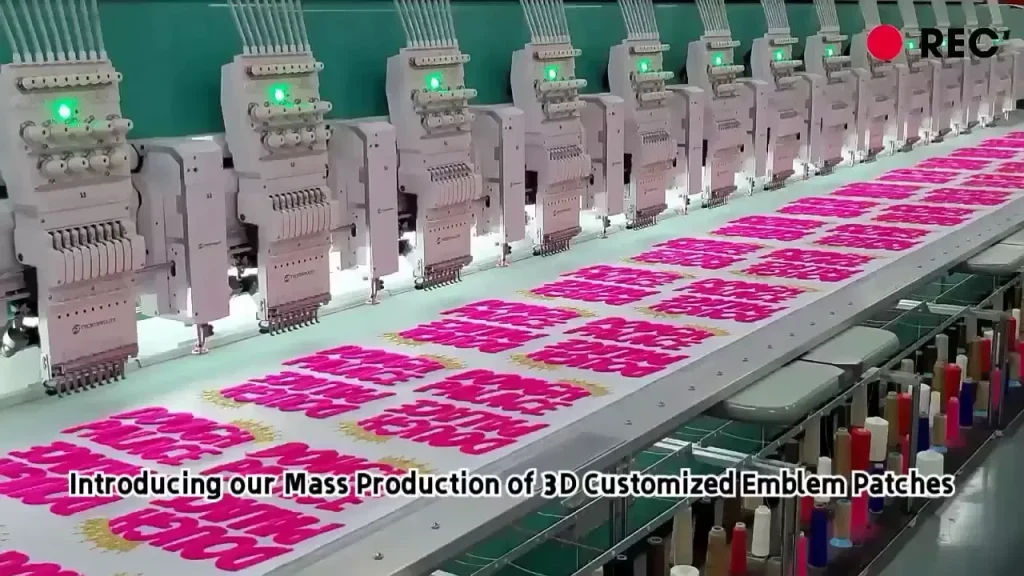
Bulk production of embroidered patches is a strategic blend of artistry and engineering that helps brands, clubs, schools, and organizations extend their branding across merchandise. When demand grows from a handful to hundreds, embroidery patches bulk production brings economies of scale, while requiring solid cost planning and robust quality control for embroidered patches. This guide highlights core cost drivers, including patch manufacturing costs and quality control for embroidered patches, as well as turnaround time patch production, to help teams forecast timelines and budgets. Design-for-manufacturing, standardized patch sizes, and consistent backing options boost custom patches production efficiency across batches. From artwork proofs to QA checkpoints, these practices align aesthetics with value, delivering reliable outcomes for large orders.
In other terms, this is about high-volume patch manufacturing where branding elements are reproduced consistently across thousands of units. Think of it as mass-produced embroidered insignias or badges, where economies of scale shave unit costs while a disciplined quality assurance program safeguards brand integrity. Turnaround considerations shift from bespoke art proofs to supplier capacity, lead times, and process optimization across batches. Strategies such as modular designs, standardized shapes, and shared color palettes improve production efficiency and consistency in large runs. By framing the topic around bulk badge production, production pipelines, and QA milestones, teams can communicate clearly with suppliers and stakeholders.
1) Bulk production of embroidered patches: cost dynamics and scale efficiencies
Bulk production of embroidered patches blends artistry with engineered processes to unlock cost advantages at scale. When demand shifts from a handful of patches to hundreds or thousands, fixed setup costs are spread over a larger quantity, reducing the per-unit price. This economies of scale is a core reason organizations pursue bulk runs, but the savings depend on thoughtful design, supplier selection, process efficiency, and rigorous quality control for embroidered patches.
In bulk patch projects, understanding patch manufacturing costs means differentiating fixed setup from variable production costs. A well-planned approach—clarifying artwork, standardizing shapes, and coordinating materials—translates into lower unit costs while maintaining brand fidelity. Achieving these gains requires a design-for-manufacturing mindset and a QA-first mindset to protect quality across a large batch.
2) Key cost drivers in patch manufacturing and how to optimize them
Stitch count and complexity directly influence machine time, thread consumption, and overall patch manufacturing costs. Complex logos with many colors and fine details demand more stitches, which increases both material usage and production time. Designers who simplify intricate shapes or limit color changes can significantly reduce stitch counts without diluting the brand identity, a crucial consideration in bulk embroidery.
Color palette and thread quality also shape costs and performance. Multiple colors require color changes on multi-head machines, which slows production, and color matching across lots can introduce variance. Choosing high-quality threads improves colorfastness and durability, potentially lowering returns. Balancing color fidelity with manufacturing efficiency is a common optimization in large-order patch production, supporting both cost control and long-term satisfaction.
3) Quality control for embroidered patches in bulk production: ensuring consistency across batches
Quality control for embroidered patches is a differentiator in bulk projects. A robust QA program reduces waste, protects brand reputation, and elevates customer satisfaction. Key checks begin with pre-production: artwork accuracy at production scale, confirmed stitch counts, color palettes, backing, and sizing to prevent surprises down the line.
During production, inline inspection tracks stitching density, color consistency, and edge finishing as patches pass through the embroidery line. Finishing QA confirms backing adhesion and any embellishments are uniform. A final inspection samples the batch for dimensional accuracy, colorfastness, and wear performance, with clear pass/fail criteria to maintain consistency across thousands of patches.
4) Turnaround time patch production: strategies to accelerate large orders
Turnaround time patch production is often the most variable factor in bulk projects. Lead times hinge on machine availability, design complexity, material sourcing, and the supplier’s schedule. To optimize, set realistic milestones that cover proofs, production, QA, and shipping, and pursue parallel workflows to avoid sequential bottlenecks.
Standardized processes—fixed cutting, consistent edge finishes, and predictable assembly steps—minimize setup and changeover times. Strategic outsourcing can help when demand spikes, provided partners share your QA standards. By coordinating proofs with procurement and aligning schedules across batches, teams can maintain reliable turnarounds without sacrificing quality.
5) Design for efficiency in custom patches production: maximizing custom patches production efficiency
Design for manufacturability (DFM) is foundational for custom patches production efficiency. Early collaboration between designers and production teams helps keep stitch counts reasonable and colors manageable, reducing complexity before production begins. A streamlined design process directly impacts both cost and lead times, especially in bulk contexts.
Color management and standardization further boost efficiency. Establishing a core palette that aligns with standard thread stocks minimizes dye lot variance and reduces setup times. Standard patch sizes and shapes enable modular production, easier die management, and faster cut-and-pack operations, all contributing to higher throughput on large orders.
6) Materials, backing options, and edge finishing: cost, durability, and workflow impact
Backing choices (adhesive, sew-on, or iron-on) determine application ease, labor needs, and initial cost. Iron-on backs can speed final application but require prep steps and curing, while sew-on or adhesive backs may incur different handling and shipping considerations. In bulk production, standardizing backing across the entire order reduces handling complexity and improves consistency.
Edge finishing options like merrowed borders or laser-cut shapes influence both aesthetics and durability. Standardizing edge finishes across a bulk run helps streamline production, cut waste, and improve yield. By deciding on backing and finish early, teams lock in process costs, minimize rework, and deliver a polished product at scale.
Frequently Asked Questions
What is bulk production of embroidered patches and how does it impact patch manufacturing costs?
Bulk production of embroidered patches uses economies of scale to lower unit costs. The main cost drivers are stitch count, color changes, backing, and edge finishing. By standardizing sizes, colors, and finishes, and applying a design-for-manufacturing approach, you can reduce patch manufacturing costs without sacrificing brand identity.
In bulk production of embroidered patches, how do stitch count and color palette affect custom patches production efficiency and patch manufacturing costs?
More stitches and color transitions increase machine time and thread usage, raising costs and reducing efficiency. Design simplification, restricting the color palette to core thread colors, and pre-planned color management help control patch manufacturing costs and speed up production, boosting custom patches production efficiency.
What quality control for embroidered patches is essential in bulk production of embroidered patches?
A robust quality program includes pre-production checks (artwork, stitch count, colors, backing, size), in-line stitching inspection, finishing QA, and final sampling for colorfastness and wear. Clear pass/fail standards keep large batches consistent.
How can turnaround time patch production be optimized in bulk orders?
Set clear lead times with milestones, run proofs in parallel with material procurement, standardize processes for cutting and finishing, and consider strategic outsourcing to maintain turnaround time without compromising quality.
Which backing and edge finishing options should be considered in bulk production of embroidered patches to balance cost and durability?
Backing choices (adhesive, sew-on, iron-on) affect labor and application; merrowed or laser-cut edges impact yield and aesthetics. For bulk orders, standardizing backing and edge finishing reduces defects and lowers costs.
What practical steps should teams follow to start bulk production of embroidered patches?
Prepare vector artwork with color specs, choose patch size and shape, agree on a standardized color palette, plan pre-production proofs and QA, set lead times and shipping, and select a supplier with proven QA and bulk capacity.
| Section | Key Points | Impact on Bulk Production | Practical Takeaway |
|---|---|---|---|
| Introduction | Context: embroidered patches blend art and engineering; patches serve as portable branding; bulk orders shift economics, quality controls, and turnaround considerations. | Sets the scope for cost, quality, and speed in large orders. | Plan for cost, quality, and lead times from the start. |
| Cost dynamics | Unit price is fixed setup plus variable production costs; economies of scale reduce per‑unit cost as batch size grows; bulk benefits hinge on thoughtful design, supplier choice, process efficiency, and QA. | Bulk orders lower unit costs only with deliberate design and QA. | Invest in design-for-manufacturing and choose suppliers with strong QA. |
| Key cost drivers | Stitch count and complexity; Color palette and thread quality; Backing and edge finishing options; Patch size, shape, and material; Setup, proofreading, and QA. | Each driver impacts time, material use, and cost; optimizing all yields savings. | Favor simple, standard designs; standardize backing/edge finishes; plan proofs early. |
| Stitch count and complexity | More colors/details increase stitches and machine time. | Higher costs and slower throughput. | Simplify shapes, limit colors, apply design-for-manufacturing principles. |
| Color palette and thread quality | Multiple colors add setup time and color transitions; thread quality affects colorfastness and durability. | Higher costs but better durability and fewer returns. | Limit color changes; ensure consistent color management across lots. |
| Backing and edge finishing options | Backing type (adhesive, sew-on, iron-on) and edge finishing (merrow, laser) affect price and application ease. | Standardization reduces defects and costs. | Choose backing/edge early and apply consistently. |
| Patch size, shape, and material | Larger patches or unusual shapes increase waste and stitching time; standard sizes simplify automation. | Standard sizes/shapes streamline production. | Use standard templates for sizes and shapes. |
| Setup, proofreading, QA | Pre-production proofs and inline QA add upfront time and cost but reduce rework later. | Quality improves and waste decreases in bulk orders. | Invest in pre-production checks and clear QA standards. |
| Quality control | Pre-production checks; In-line inspection; Finishing QA; Final inspection. | Quality is a differentiator and waste reducer. | Establish pass/fail standards across the batch. |
| Turnaround time | Influenced by machine availability, complexity, material sourcing, and supplier schedules. | Turnaround is variable; optimize with parallel workflows. | Set milestones; run proofs in parallel with procurement. |
| Turnaround time strategies | Lead times, parallel workflows, standardized processes, strategic outsourcing. | Faster delivery without compromising quality. | Document SLAs and QA requirements with suppliers. |
| Materials, processes, and design | Align backing with end-use; standard sizes; optimize embroidery artwork; color management; finishing options. | Efficiency and durability. | Standardize materials and artwork for large orders. |
| Strategies to reduce cost | DFM; color standardization; standard sizes/shapes; pre-production proofs; packaging/shipping efficiency; data/supplier alignment. | Systematic cost reductions across the workflow. | Collaborate early to fix parameters and consolidate data. |
| Case study | 5,000 patches; reduced stitch count; 3-color palette; 3×3 inch size; merrow edge; QA detected color variance early; turnaround improved. | Demonstrates tangible savings and quality gains in bulk. | Apply design and workflow alignment to achieve value. |
| Common pitfalls | Inaccurate artwork; color drift; underestimating setup time; over-customization; poor supplier alignment. | Leads to rework and delays. | Standardize data and verify artwork early. |
| Practical checklist | Final vector artwork with color specs; decide size/shape/backing/finish; standardized color palette; pre-production proofs; clear lead times; reliable supplier. | Set up bulk projects for success. | Follow the checklist to reduce errors. |
Summary
Bulk production of embroidered patches offers substantial cost benefits when design, materials, manufacturing processes, and quality assurance are aligned across the supply chain. By simplifying color palettes, standardizing patch sizes and shapes, and enforcing rigorous QA, brands can achieve dependable turnaround times and high-quality results for large orders. Standardization across backing choices, edge finishes, and finishing processes helps reduce waste, improve consistency, and streamline logistics. When executed thoughtfully, bulk patch production turns a design concept into a scalable branding asset that stands up to wear and repeated use, delivering value with every stitch along the way to customers.