
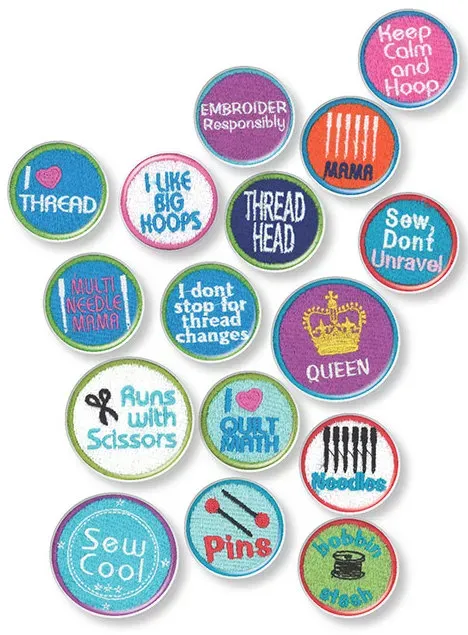
Best Stabilizers for 3D Embroidered Patches and Designs guide modern sewists toward crisper edges and lasting depth in garments, bags, and accessories. Stabilizers for embroidery help prevent fabric stretch and keep the raised texture looking defined, especially when foam, batting, or padding is involved. This overview explains the main backing options—cut-away stabilizer, tear-away stabilizer, and water-soluble stabilizer—and how they influence the 3D effect. Selecting the right backing improves wash durability, edge crispness, and overall patch lifespan. By weighing fabric type, patch size, and design density, you can choose stabilizers that deliver a professional, durable 3D look.
Using alternative terminology—such as stabilizing foundation, supportive backing, and backing material—helps align the concept with related embroidery topics. For 3D patches, designers often consider permanent vs temporary backings, foam compatibility, and weave compatibility as key factors. Common options include a sturdy permanent backing, a removable temporary backing, and dissolvable film that minimizes bulk around raised areas. Understanding these equivalents helps in planning, testing, and communicating a patch’s stabilization needs across fabrics, densities, and wash cycles.
Frequently Asked Questions
What are the Best Stabilizers for 3D Embroidered Patches and Designs, and how do I choose among them?
For 3D embroidered patches, the Best Stabilizers for 3D Embroidered Patches and Designs are typically cut-away backings paired with foam or padding. This combination provides durable support for dense stitches and helps preserve the raised texture through washing. Tear-away stabilizers can work for lightweight designs, but may not keep edge definition over time; water-soluble stabilizers are useful on delicate fabrics or to minimize bulk around the 3D elements. Consider adhesive stabilizers for irregular shapes or where hooping is difficult.
When should I use cut-away stabilizer for 3D embroidered patches and designs?
Use cut-away stabilizer for thick, foam-backed 3D patches and patches that will see frequent washing. A sturdy cut-away backing provides permanent support, reduces puckering, and helps the 3D texture hold its shape. Layering with foam and a lighter top stabilizer can preserve edge crispness without restricting the puff.
How do tear-away stabilizers compare to cut-away stabilizers for 3D embroidered patches?
Tear-away stabilizers are quick and convenient for lighter fabrics or simpler designs, but they are temporary and may not provide long-term stability on bulky 3D patches. For patches with foam or tall 3D elements, a cut-away stabilizer offers stronger backing that resists distortion through wear and repeated washing.
Can water-soluble stabilizers be used for 3D embroidered patches, and when should you use them?
Water-soluble stabilizers can reduce show-through and bulk on open or delicate areas of 3D designs. They’re typically used on top of a conventional backing and dissolved after stitching to leave minimal backing around raised features. They’re especially helpful for freestanding or layered patches on lightweight fabrics, or when you want a soft, flexible edge.
What factors should guide your choice of stabilizers for 3D embroidered patches and designs?
Consider fabric type and density, patch size and shape, foam or padding density, stitch density and design complexity, and wash or wear expectations. For most dense, durable 3D patches, the Best Stabilizers for 3D Embroidered Patches and Designs are cut-away backings with appropriate weight; for light fabrics or quick projects, tear-away or water-soluble options can be suitable, depending on durability needs.
What are common mistakes when using stabilizers for 3D embroidered patches and designs, and how can I avoid them?
Common issues include puckering from too-light backing, flattening of the 3D effect from overly soft stabilizers, frayed edges from insufficient support, and shiny patches from heavy stabilizers on thin fabrics. Fix them by choosing a heavier cut-away backing for dense designs, layering stabilizers with foam thoughtfully, using the right needle and stitch settings, and testing on similar fabrics before production.
| Aspect | Key Points |
|---|---|
| Role of stabilizers | Stabilizers provide a foundation to prevent fabric from stretching, keep stitches aligned, prevent puckering, and support 3D texture beneath foam, felt, or batting used to create raised patches. |
| Why 3D patches require stabilization | 3D patches add height with foam or padding and dense satin stitches. The backing must support bulk without becoming rigid, resist washing, and remain flexible enough to bend without tearing to preserve the 3D shape. |
| Stabilizer types: Cut-away | Permanent backing that stays on the patch. Provides strong support for dense fills and thick 3D patches; helps edge definition and reduces shifting during washing. |
| Stabilizer types: Tear-away | Temporary backing removed after stitching. Suitable for lighter fabrics or simpler designs; may not provide the same long-term stability but is faster to work with. |
| Stabilizer types: Water-soluble | Dissolves in water, leaving no backing. Useful for delicate fabrics or to minimize bulk around raised areas; often used with a conventional backing and dissolved after stitching. |
| Adhesive stabilizers and other options | Adhesive/sticky stabilizers grip fabric without hooping, helpful for stretchy textiles or irregular shapes. Can be layered with a backing to create a temporary hold before final assembly. |
| Choosing stabilizers: Factors | Fabric type and density, patch size and shape, presence of foam or padding, stitch density and design complexity, and the expected care/wash durability all guide the stabilizer choice. |
| Practical guidelines for choosing stabilizers |
|
| Techniques to apply stabilizers effectively |
|
| Finishing and trimming tips | Trim backing after stitching; for tear-away, remove excess carefully; for foam-backed patches, trim close to the edge to reduce bulk that may hinder final assembly. |
| Common mistakes and how to avoid them |
|
| Real-world examples and use cases | Denim patches benefit from cut-away backing for post-wash shape; sports apparel uses sturdy stabilizers to resist abrasion; crafters may prefer tear-away for quick projects when wear is light. |
Summary
Best Stabilizers for 3D Embroidered Patches and Designs set the foundation for durable, visually striking patches. Understanding stabilizers helps patch makers select the right backing—whether cut-away for lasting support, tear-away for speed, or water-soluble to minimize bulk—while applying hooping, layering, and finishing techniques that preserve crisp edges and robust 3D texture through repeated wear and washing. Consider fabric type, patch size, foam density, stitch complexity, and care expectations to consistently achieve professional results that stand up to life in the real world.