
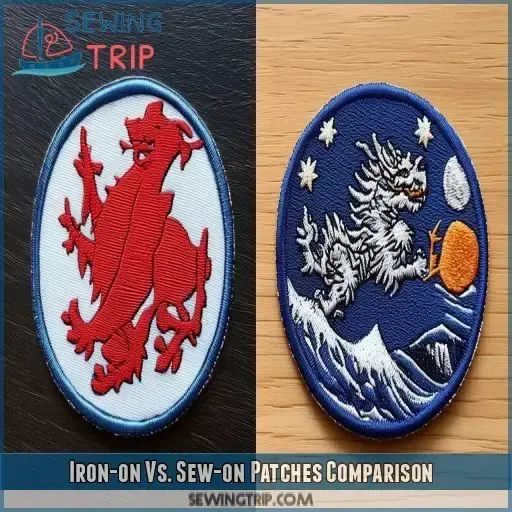
Iron-On Patches vs Sew-On is a common decision for personalizing clothing, bags, and gear. Understanding their strengths, trade-offs, and best-use scenarios helps you choose with confidence. Iron-on patches durability can be excellent on synthetic fabrics when applied correctly, but heat and washing can weaken the adhesive. We will cover how to apply iron-on patches properly and what extra steps ensure a secure bond. Whether you are after quick customization or lasting wear, you will leave with clear guidance on which method fits your fabric, design, and care routine.
Viewed through an alternative lens, you can frame the choice as heat-fixed patches versus stitched badges. For many designers, the decision hinges on durability, maintenance, and the patching technique, captured by phrases like sew-on patch technique and custom patches iron-on or sew-on. Sew-on approaches tend to excel on items that endure frequent washing, offering a robust mechanical bond. In lighter fabrics or decorative uses, an iron-on option remains appealing when applied with care.
Iron-On Patches vs Sew-On: Quick Overview and Suitability
When you’re deciding between Iron-On Patches vs Sew-On, the choice often comes down to how quickly you want results, how much heat your fabric can tolerate, and how permanent you need the patch to be. Iron-on patches rely on a heat-activated adhesive on the back, which bonds to fabric with heat, pressure, and time. This makes them ideal for fast customization on casual outfits, bags, and light outerwear, and it aligns with the idea of custom patches iron-on or sew-on.
For fabrics that see frequent washing or occasional high heat, sew-on patches advantages become more apparent. A mechanical bond created by stitching around the patch’s edge or with a backstitch typically outlasts glue on many garments, especially those that tumble through a busy washing cycle. Understanding your fabric and washing routine helps you pick the best method for your design.
Durability Deep Dive: Iron-On Patches Durability and Sew-On Patch Longevity
Iron-On Patches durability can be excellent on synthetic fabrics and sturdy denims when properly applied and heat-set. The adhesive performs well under light to moderate wear, but repeated washing, high heat, or aggressive dryers can cause edge peeling or adhesion loss over time.
Sew-On patch technique tends to deliver robust longevity, especially on fabrics that experience heavy wear or frequent washing. The bond is mechanical rather than adhesive, so it can endure more cycles. However, the overall durability still depends on stitch quality; poorly finished borders can fray or loosen, reducing long-term performance.
How to Apply Iron-On Patches: Step-by-Step for a Strong Bond
how to apply iron-on patches: start by cleaning the fabric surface, then position the patch where you want it. Place a thin cloth over the patch to protect it, and press with a hot iron at the recommended temperature for 30–60 seconds, applying firm, even pressure. After lifting the iron, allow the patch to cool and test adhesion to ensure a solid bond.
For maximum durability, you can perform a second pass or bake in a longer cure time, depending on the patch material and fabric. Always follow the manufacturer’s instructions for temperature and time. If you’re unsure about heat tolerance, consider combining with sewing edges to lock the patch in place and improve longevity.
Sew-On Patch Technique: Stitches and Methods for Longevity
Sew-On Patch Technique emphasizes a secure mechanical bond through stitching. Common approaches include a tidy blanket stitch around the edge, a running stitch perimeter, or a zigzag stitch for machine sewing. These techniques help the patch resist edge curling and lifting, especially on thicker fabrics.
Edge finishing and thread choice matter. Use a color-matched thread for a neat look, and take small, careful stitches around curved edges to prevent puckering. Proper stitch density and securing anchor points at corners can boost durability, making sew-on patches a reliable option for backpacks, denim jackets, and workwear.
Fabric Choices and Care: Matching Materials and Maintenance
Choosing the right fabric for your patch is a key step in success. Lightweight knits and jersey respond well to iron-on patches when heat tolerance is controlled, while heavy fabrics like denim, canvas, or leather can support both methods with edge reinforcement.
Care and maintenance play a big role in longevity. For iron-on patches, avoid high-heat drying and dry-cleaning solvents that could weaken the adhesive; turn garments inside out, choose a gentle cycle, and air-dry when possible. Sew-on patches typically tolerate machine washing on gentle cycles with cold water, and re-stitching or resecuring edges can help if you notice any edge lift.
Choosing Between Custom Patches Iron-On or Sew-On: A Practical Guide
Choosing between custom patches iron-on or sew-on comes down to fabric type, wash routine, and how permanent you want the attachment to be. If you need quick customization on sturdy fabrics and don’t expect heavy washing, iron-on patches can be a great choice, especially when speed matters.
If you require long-lasting patches that withstand frequent washing or high heat, or you’re patching on fabrics that don’t tolerate heat, sew-on patches are often the safer bet. For a balanced approach, many crafters combine methods: use iron-on for quick setup and then lock edges with stitching, addressing the phrase of custom patches iron-on or sew-on as a practical decision.
Frequently Asked Questions
Iron-On Patches vs Sew-On: What are the sew-on patches advantages compared to iron-on patches?
Sew-on patches offer a durable mechanical bond that survives frequent washing and high heat without relying on glue. They’re especially advantageous on heat-sensitive fabrics and gear that see heavy use. While sewing takes longer to apply, once in place the edges stay secure and can be repaired by restitching if needed.
How durable are iron-on patches durability compared to sew-on patches?
Iron-on patches can be durable on denim and synthetic fabrics when properly applied and heat-set, but the adhesive can weaken with repeated washing or high heat. Sew-on patches typically provide stronger longevity because the mechanical bond isn’t affected by heat, though stitching quality matters for edge fray over time.
How to apply iron-on patches?
To apply iron-on patches, clean the fabric, position the patch, place a thin cloth over it, apply a hot iron at the recommended temperature for 30–60 seconds with steady pressure, then let it cool and test adhesion. For extra durability, you can re-iron once and allow it to cure overnight.
Sew-on patch technique: what stitch patterns work best for longevity?
Popular sew-on patch techniques include a tidy blanket stitch around the edge, a running stitch perimeter, or a zigzag stitch for machine sewing. For curves, take small, even stitches to avoid puckering; ensure even tension and use color-matched thread for a neat finish.
Custom patches iron-on or sew-on: how to choose for different fabrics and wash routines?
Choose based on fabric heat tolerance and wash frequency. Iron-on patches are quick on sturdy fabrics but may degrade with frequent washing or high heat. Sew-on patches excel on fabrics that see regular washing or heat exposure. A blended approach—iron-on for quick setup and edge reinforcement with stitching—can offer both speed and durability.
Which method lasts longer in a garment going through frequent washing: Iron-On Patches vs Sew-On?
Typically, sew-on patches last longer under frequent washing due to their mechanical bond, while iron-on patches can hold up well on suitable fabrics with careful heat-setting. If you expect regular laundering, consider sew-on or reinforce iron-on edges with stitching for added longevity.
| Aspect | Iron-On Patches | Sew-On Patches |
|---|---|---|
| What they are | Heat-activated adhesive backing; bonds with heat, pressure, and time. Quick and convenient for casual wear. | Stitching along the patch edge or a full backstitch; mechanical bond; reliable on fabrics that tolerate heat less well. |
| Durability & Longevity | Good on synthetic fabrics and denim when properly applied and heat-set; adhesive can weaken with washing and high heat; edges may peel. | Robust on fabrics with heavy wear; mechanical bond persists through washing; depends on stitch quality; edges can fray if not stitched well. |
| Application Process | Clean fabric, position patch, cover with thin cloth, press with hot iron 30-60 seconds, apply pressure, cool and test; cure overnight; follow manufacturer instructions. | Align, pin, stitch around edge or backstitch; common stitches include blanket, running, zigzag; use color-matched thread; handle curves with small stitches. |
| Use Cases & Fabric Considerations | Suitable for lightweight fabrics like jersey if heat is controlled; on denim/canvas edge stability matters; may require extra securing. | Ideal for heavy-wear fabrics (backpacks, denim jackets, workwear); good for embroidery; heat can distort embroidery/backing; edges secure with stitching. |
| Care & Maintenance | Avoid high heat in dryers; turn garment inside out; gentle cycle; air-dry; reseal edges if lifting. | Machine wash gentle/cold; follow care; iron from reverse to reseal edges; generally durable with proper care. |
| Pros & Cons | Pros – fast, convenient; Cons – adhesive can peel with heavy washing or high heat; not ideal on delicate fabrics. | Pros – durable, reliable; Cons – longer to apply; requires stitching equipment or manual sewing. |
| Choosing the Right Option | Consider fabric type, wash routine, and permanence; iron-on for quick setup on sturdy fabrics; sew-on for longevity on high-wash fabrics. | Hybrid approaches: iron-on for quick setup with final stitching to lock edges; choose based on fabric heat tolerance and desired permanence. |
| Bottom Line | Both methods have valid uses depending on fabric, wear, and care requirements. | Select based on real-world needs to ensure patches stay put and look good over time. |
Summary
Iron-On Patches vs Sew-On is a practical choice that balances speed and durability in fabric customization. Iron-On patches offer quick, temporary flair and are well-suited to sturdy fabrics when heat is carefully controlled, while sew-on patches provide robust longevity on fabrics that endure regular washing and heat exposure. The right option depends on your fabric, wear patterns, and how you want your patch to behave over time. By following proper application techniques and care guidelines for each method, you can maximize adhesion, prevent edge lift, and keep your patches looking sharp across seasons. Whether you prioritize convenience or permanence, the best patching approach matches your design goals and the realities of your wardrobe.